Showing posts with label good things come in small packages. Show all posts

Thursday

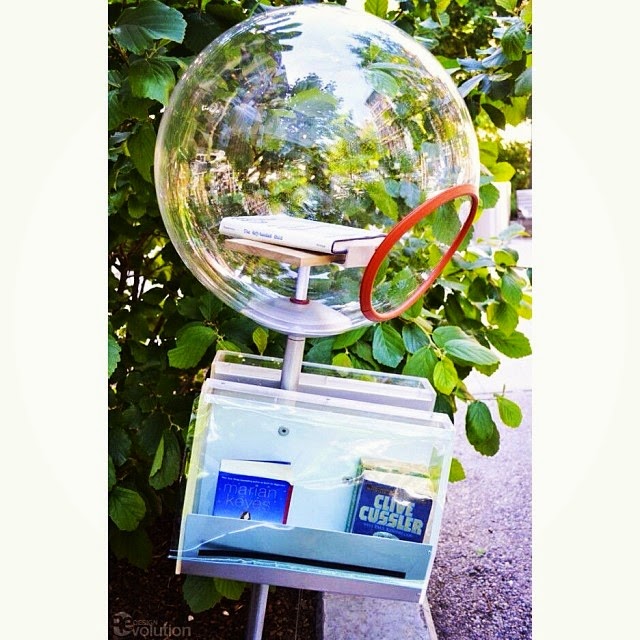
12 creative little libraries from around the world.

little libraries from around the world.

Our cities are full of large libraries that are amazing and free, but here we have chosen to share the little tiny libraries that are springing up everywhere. These libraries can be created by anyone, anywhere and each one has a story to tell about the love of books, the love of sharing, and a sense of community.

Hundreds of little libraries have been created but not all of them have been photographed and shared. That’s why we set out to find as many little libraries as we could. We love how they add uniqueness to the areas of the cities and suburbs where they are found. We really enjoy the creativity that has gone into making these libraries and have included what we feel are the most creative from around the world.

We hope you enjoy this list of the most creative little libraries from around the world.

We would love to add more. Did we miss any from your neighborhood? Feel free to submit pictures at our Facebook or Twitter feeds to be added here or let us know in the comments below.


Tree stump library


Robot library Monica Thompson

Tardis in Kenmore Washington, USA. Jennifer Brozek
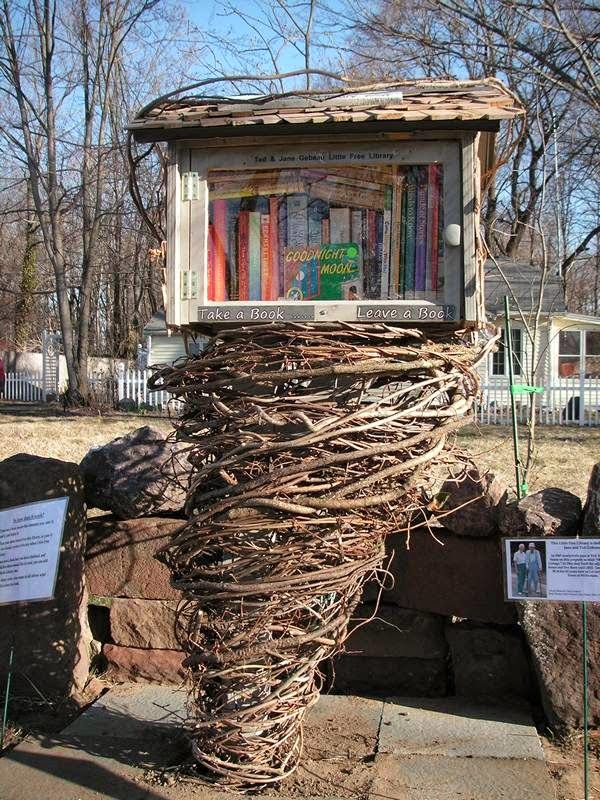
Wizard of Oz Tornado library Pomeroy Street MASSACHUSETTS, USA

Space age library
 
Winchester, Texas USA. 'We decided to build a library that reflected our small community.
A chicken coop theme fit us perfectly!' - Margaret Atkins.

Created by Stereotank, a public installation project providing New Yorkers
with a spontaneous opportunity to read a book.

Tree trunk library in Jackson Street Seattle, USA

Library in a phone booth

Public Bookshelf created in a bus stop in the city of Porto Alegre, Brazil


Book house in Maleny, Queensland, Australia.
 
Houston, Texas USA. A boat-shaped Library at the church for Clear Lake Community.
Diane Jones.

 
If after seeing these cute and worthwhile structures you may feel inspired to build your own out of an old cupboard or some other creative design in your head. There are people who can help you with the considerations that you may yet have not thought apart like "how do I keep my little library protected from the rain? " or "how wide should the shelves be to house most books?"

Little Free Libraries & Tiny Sheds: 12 Miniature Structures You Can Build is highly recommended, as the book you need, by The Little Free Library organization. Yes, there is an organization! They are a nonprofit organization based in Hudson, Wisconsin, USA. Little Free Library (LFL) is an award-winning nonprofit organization at the center of a global literacy movement. Find out more about it here.

This book is produced in cooperation with Little Free Library, and is a builder's complete source of inspiration and how-to knowledge. Illustrated throughout with colorful step-by-step photography and a gallery of tiny structures for further inspiration, Little Free Libraries and Tiny Sheds covers every step: planning and design, tools and building techniques, best materials, and 12 complete plans for structures of varying size and aesthetics. In addition, author and professional carpenter Phil Schmidt includes information on proper installation of small structures and common repairs and maintenance for down the road. You can check it out or purchase it here. 


Little Free Libraries and Tiny Sheds book cover

If you liked this article you may also like History of the Little Free Library which includes the benefits of running a little library.

Monday

History of the Little Free Library

 
In its most basic form, a Little Free Library is a box full of books where anyone may stop by and pick up a book and bring back another book to share. It's a  neighbourhood book exchange. It’s a place where neighbours share their favourite books.

In 2009, Tod Bol decided to build a model schoolhouse as a tribute to his mother, a former school teacher who loved to read. He built it from recycled materials, filled it with books and placed it in his front garden in Wisconsin, USA with a sign that read ‘Little Free Library.’

Tod Bol's 1st little library
He made more little houses and gave them to family and friends and the idea for a global network of Little Free Libraries was born.

The most often quoted benefits of Little Free Libraries
  • People meet more neighbours and passers-by than they have in years.
  • They often spend time getting to know people as well as books.
  • They value the free-wheeling exchange of books, especially because they are often surprised by the variety and quality of the collections.
  • They like giving as much as –or perhaps even more than—taking books.
  •  Little Free Libraries are likely to have a positive influence on community quality of life and social capital.
  • Small, local business owners report that Little Free Libraries help them attract and keep customers.
  • Children, youth and adults of all ages and backgrounds can share in the give and take. People of widely diverse socioeconomic and cultural backgrounds participate in this grassroots effort.
You can find out more about the Little Free Library here .

This is linked up at Read With Me

Tuesday

Pay it forward


  • International Pay it Forward Day is 

    Thursday, April 28, 2016

  • Pay it Forward Day UK
  • Pay It Forward Foundation

  • International Pay It Forward Day

    Pay it forward is an expression used when someone who is done a good deed repays it to others not the original benefactor. The concept is old, but the term is quite recent:

    • First use of the term may have been by Lily Hardy Hammond in her 1916 book In the Garden of Delight: "You don't pay love back; you pay it forward."
    • The Pay it forward concept was the key plot element in an ancient Greek play from 317 BC called Dyskolos by Menander.
    • The concept was described by Benjamin Franklin, in a letter to Benjamin Webb dated April 25, 1784:
    I do not pretend to give such a deed; I only lend it to you. When you [...] meet with another honest Man in similar Distress, you must pay me by lending this Sum to him; enjoining him to discharge the Debt by a like operation, when he shall be able, and shall meet with another opportunity. I hope it may thus go thro' many hands, before it meets with a Knave that will stop its Progress. This is a trick of mine for doing a deal of good with a little money.
    • The term "pay it forward" was used by Robert A. Heinlein in his book Between Planets, published in 1951
    • In 2000, Catherine Ryan Hyde's novel Pay It Forward was adapted into a film of the same name, starring Kevin Spacey, Helen Hunt and Haley Joel Osment. It describes creating a social movement of doing good deeds to make the world a better place.

    Monday

    Change the world in just 5 minutes at a time

    Can a bunch of school kids really change the world in five minutes a day? This class of Aussie primary school kids demonstrate over the course of a week that it only takes five minutes a day to make a positive impact—from recycling to planting fruit and veg to collecting old mobile phones and telling jokes.


    Sunday

    A water bottle with edible packaging


    Ooho is a spherical membrane for carrying water, which can be eaten after drinking the contents.

    Rodrigo Garcia Gonzalez, Guillaume Couche and Pierre Paslier created the biodegradable packaging using a combination of brown algae and calcium chloride. To drink, you simply suck on the membrane and pour the water into your mouth. The packaging can then be either eaten or thrown away.

     In its earliest days, the concept was brought to life in a humble student kitchen, where each prototype was crafted by hand. The creators experimented tirelessly, refining their formulas and seeking honest feedback from anyone willing to taste—friends, family, even curious passersby. The name “Ooho” emerged organically, inspired by the delighted exclamations people made when encountering the quirky, edible spheres for the first time: a chorus of surprised “Oohooo!”s that captured the spirit of the invention perfectly.

    Each Ooho bag costs  0.02 USD to make. Ooho could soon be the cheap, environmentally friendly alternative to the plastic bottle.

    The video shows the invention in action.

    Saturday

    Promoter of Peace

    Peace Pilgrim, in 1953, Toledo, Ohio, USA.
    " In order for the world to become peaceful, people must become more peaceful." Peace Pilgrim.

    At age 44, Mildred became Peace Pilgrim 
    She put on a top on which she had sown her new name and set out to walk across America. She wore blue clothing because it was considered the international colour of peace at the time.
    It was 1953 and Peace Pilgrim walked from California to New York, and from border to border, sharing the message of peace. Peace Pilgrim walked and spoke continuously across every state of America, and in Mexico and Canada from 1953 to 1981, when she died.

    She was born in New Jersey, USA and given the name Mildred Lisette Norman.  She was married for 13 years to Stanley Ryder.
    Her life was then changed by a mystical experience. In her book, she explains this "spiritual awakening" and the meditation practice that inspired her to start her walking journey for peace.
    She vowed to "remain a wanderer until mankind has learned the way of peace, walking until given shelter and fasting until given food."

    Read more about Peace Pilgrim: Her Life and Work in Her Own Words

    “This is the way of peace: Overcome evil with good, falsehood with truth, and hatred with love.” Peace Pilgrim.

    Get more news about peace at GNN.

    Friday

    CHOOSE A CHALLENGE to help the environment

    help the environment tips
    As individuals there are many things we can do personally to make our own living more sustainable or environmentally friendly. Have you tried or are you doing any of these simple things? They all add up to a better planet.

    Turn off the TV for a week.

    Walk or cycle nstead of taking the car.

    Have 3 minute showers.

    Change your light bulbs to more energy efficient ones. Check if they can be disposed of environmentally.

    Only wash your clothes in cold water.

    Take your re usable bags to the store to bring home your groceries.

    Buy local produce. If you are lucky enough to have some earth plant something edible. If you are lucky enough to have a nearby grower's market support it. 

    Get more environmental good news, ideas and tips at GNN Good News Network.                                                                                                                                                        

    Choose a frugal challenge: disconnect

    Try it for a day: go without Facebook or Twitter or Pinterest or tumblr or any of the other social sites you go to daily.

    This is a 1 day challenge and probably most of us have already done this - some intentionally and some not. Maybe when you were travelling you had no access to the internet or, like me, when you visited your grandmother.

    How about going without the computer for more than a day ? No email, no browsing? This also may have happened to all of us. Let's consider a further challenge and maybe try 3 days?

    Or the big one: Don't use the computer for a week.

    This may feel scary to some. My teenage son said taking his computer away would be like chopping off his arm! Quite a vivid analogy. We need that connection with others and we feel we get it from the computer. Teenagers obviously feel this strongly.

    Walking or driving in the car, quietly and in solitude, is where I get most of my creative ideas or clarity on something in my life. The same way that going on a holiday helps give a bigger picture on life. I'm with Audrey Hepburn who said I have to be alone very often. I'd be quite happy if I spent from Saturday night until Monday morning alone in my apartment. That's how I refuel.

    Will you Disconnect? I hope to do so soon, to walk amongst the trees and reflect and journal and maybe read a book by one of my favourite authors or creative people who I mention here below:
    • Carl Jung whose search for an authentic experience lead him into solitude, away from men and events.
    • This is to be alone; this, this is solitude! ~ Lord Byron, Childe Harold's Pilgrimage
    • We are rarely proud when we are alone. ~ Voltaire.
    • Without great solitude, no serious work is possible. ~ Picasso
    • In order to understand the world, one has to turn away from it on occasion. ~ Albert Camus, The Myth of Sisyphus: And Other Essays
    • The more powerful and original a mind, the more it will incline towards the religion of solitude. ~ Aldous Huxley
    • I have never found a companion that was so companionable as solitude. ~ Henry David Thoreau, Walden

    Tuesday

    Being Happy in Unhappy Circumstances


    It seems that every day life is getting more and more difficult.  We no longer have to turn on the TV to hear stories of heart ache anymore.  Talk to any of your friends, family, or neighbors and I’m sure you’ll find hard times have hit closer to home than we are used to.  Yes, hard things are happening.  But that doesn't mean that we have to become hard. 
     
    I believe that we can be happy even in unhappy circumstances. 
    How?   In the book “The How of Happiness” Sonja Lyubomirsky states that 50 percent of a given human’s happiness level is genetically determined (based on twin studies), 10 percent is affected by life circumstances and situation, and a remaining 40 percent of happiness is subject to self-control.  Isn't that interesting!  Only 10 percent is affected by life, and 40 percent is subject to self-control.  I find that amazing, and contrary to popular belief.  If that is true, then we do have the ability to choose to be happy.  So, how do we do that?
       
    Here are a few things I believe will help us to be happy in unhappy circumstances.
      
    1. Help Others.  Feeling down about yourself or your life?  The best antidote for that, in my opinion, is doing something for someone else.  Seriously, it's like magic!  While we are helping someone else our own sadness disappears.  And it's not just by doing grand acts, small acts of kindness are just as helpful.  A familiar quote says, "if you see a friend without a smile give him one of yours.”  Sometimes that's all it takes. 

    2. Be optimistic.  The definition of optimism is "A tendency to expect the best possible outcome or dwell on the most hopeful aspects of a situation."  Sometimes it's hard to "expect the best possible outcome", but I like that second part, dwell on the most hopeful aspects of a situation.  Ahhh, dwelling.  We are all prone to dwell on things now and then.  Why not embrace it by dwelling on the good instead of the bad!  See the good in situations.  Look for it.  Write it down.  Be thankful for it.  Tell others the good things going on instead of the bad.  If you can make that a habit, you'll be much happier.  "I can complain because the rose bushes have thorns or rejoice because the thorn bushes have roses", J. Kenfield Morley.  Be an optimist!

    3. Don't give up.  Take a break, have a cry, call your best friend, but DO NOT QUIT.  

    The following poem always helps me find the strength to carry on.
     When things go wrong, as they sometimes will,
    When the road you're trudging seems all up hill,
    When the funds are low and the debts are high,
    And you want to smile, but you have to sigh,
    When care is pressing you down a bit,
    Rest if you must, but don't you quit...
     Success is failure turned inside out.
    The silver tint of the clouds of doubt,
    And you never can tell how close you are,
    It may be near when it seems so far,
    So stick to the fight when you're hardest hit.
    It's when things seem worst that you must not quit.
    Author Unknown

    Don't give up.  You are strong.  You can get through it.  Believe in yourself, and have faith.  I believe that by helping others, embracing optimism, and not giving up our sorrows can be replaced with joy.  Good luck to those of you facing hard times.  It is my hope that we can all find happiness, even in the midst of trials.
     Your optimistic friend,
    Maria @ focusedonthepositive

    Maria is a quirky Canadian and an optimistic mother of two. She currently lives in the U.S. with her family and is the creator of Focused on the Positive, a blog about positivity. 


    Friday

    Solar cooking in tibet

    Frugal ideas for environment
     These are Tibetan solar cookers that are used all over Tibet to boil kettles of water. Solar cookers use no fuel, which means they do not need firewood, gas or electricity. A solar cooker would pay for itself in reduced fuel costs over time. Since it reduces firewood use, the solar cooker reduces deforestation and habitat loss. If more sunny countries used solar cookers it would have environmental benefits.

    Tuesday

    Tiny Houses for sustainable living

    Perhaps one of the neatest and most committed ways people are engaging in eco-civil disobedience is through the Small Living or Tiny House Movement. In the wake of the housing bubble and bust, people are turning their backs on the dream of a McMansion with private drive and in-ground pool, and are looking for homes with smaller ecological footprints — both figuratively, and literally! Tiny houses are small cottages or cabins built from sustainable, natural materials on trailer beds or permanent foundations ranging between 65 and 140 square feet. Not only does it take less energy to heat, cool, light and clean such a small residence, but folks who choose the tiny house lifestyle choose to live with fewer material possessions and a greater reliance on community spaces and public amenities. Some build tiny houses in gorgeous natural landscapes, trading spacious indoor rooms for amber fields, majestic mountains and spacious skies. PAGAN + Politics

    WANT MORE? : James Vanderlaan is building a tiny house in his search for living a simpler, greener, less stressful lifestyle. Read more of his story. 
    He is also writing a book on Tiny Houses called TINY HOUSE BOOK SET
    See interviews with owners of tiny homes


    PHOTO THANKS TO TINY HOUSE LISTINGS

    Friday

    Frugal Friday: Small changes can make an impact on energy

    Small changes can have a huge impact on your savings and on the environment.


    What of the following do you already do to save energy?
    • Turn off the mobile phone charger when not in use.
    • Turn off the microwave at the power - it uses power to run the digital display.
    • Turn off computers when not in use.
    • Change your computer's screen to energy saver.
    • Borrow books from your library instead of purchasing them.
    • Buy an energy efficient 5 star rating refrigerator when you need a new fridge.
    • Change to compact fluorescent globes.
    • Use heater on a low setting.
    • Only operate the dishwasher when it is full.
    • Take 3 minute showers instead of baths.
    • Switch off lights as you leave the room.
    • Use local shops instead of ones further away.
    Do you have any other useful ideas to be frugal and help the environment? They seem to go hand in hand.

    Saturday

    Do good

    We ought to do good to others as simply as a horse runs, or a bee makes honey, or a vine bears grapes season after season without thinking of the grapes it has borne.
    Marcus Aurelius (121 – 180 AD) a Roman Emperor considered one of the most important Stoic philosophers.


    This quote is from Bees Hive the house of everything bee where you will find all manner of interesting information about these amazing creatures including Medieval art with beehives,  Bee Lore: The Sacred and Divine Bee, Natural beekeeping, free bee photos,

    Tuesday

    Gnomes


    A gnome is a small spirit first seen in Renaissance magic and alchemy. Gnomes are associated with the earth, the garden, mining and the underground and often guarded treasures from the earth such as gold, silver and gemstones.
    From More Celtic Fairy Tales by John Dickson Batten

    The word gnome comes from Renaissance Latin gnomus, which first appears in the works of 16th Century alchemist and doctor Paracelsus. He is perhaps deriving the term from Latin gēnomos meaning "earth-dweller". Paracelcus described them as the most important of the earth spirits able to move easily through the earth and not liking sunlight.


    We now use gnomes as those cute little garden dwellers seen to frequent many plant shops and the occassional garden.


    You may also be interested in Good things come in small packages with links to make felt gnomes and pixies!

    Saturday

    eco friendly gift ideas


    Frugal said... "Good News for the environment. Give gifts that use themselves up and don't clutter peoples lifes with stuff like :


    • memberships and courses,

    • lotions and soaps,

    • art materials,

    • stationary supplies

    • food, like jam or salad dressings " Frugal website.
    Other suggestions are:

    •support local food growers, local artists and crafts people
    •give vouchers for luxury items like beauty treatments e.g. manicures and facials, or a restaurant meal voucher
    •movie tickets, theatre tickets, rock concert tickets, fun park tickets
    •enviro friendly wrap - wrap gifts in material e.g. tea towels for food gifts, scarves for clothing or jewellery, re use paper,
    •Earth Sky Sea eco friendly gift suggestions.
    •Things from nature - like potted plants, flowers from your garden, mini cactus, a herb garden; pine cones and other seed pods you have collected make wonderful decorations; learn how to create with from Garden Mama
    •Handmade - this idea is building momentum and has a really big following all over again. Why is handmade better for the environment? "Every item you make or purchase from a small-scale independent artist or crafter strikes a small blow to the forces of mass production." buy handmade.org Check out craft tutorials with Shannon at Rhythm and Rhyme; Handmade Items on Etsy or Made it
    •support others who need help at The Green Gift collection were your money helps protect the environment and your gift is tax deductible or The Oxfam Collection where you can browse for charitable gifts

    Tuesday

    An Apple a Day really may keep the doctor away.

    Apples a superfood
    If you read all the information about apples - you make think that this old adage is true.
    Apples are being billed as the new superfood!
    Apples an Antioxidant Powerhouse, Apples a low GI fruit, Apples full of antioxidants, Apples a weight loss success food. (Good marketing)
    They even have their own website now one a day superfood
    I don't know if all the claims are true but I can't see any harm in munching on a juicy apple. What do you think? Of course fresh is best and definitely eaten with the skin on but they are also scrumptious in low fat apple crumble and the classic homemade apple pie.

    Photo By asagpol

    Monday

    Books for babies


    Great Australian author, Mem Fox, is passionate about reading to babies from birth and the magic it creates. She believes reading with your child, or any child, has wonderful effects on the babies development. Of course many studies confirm the value of reading aloud to very young children especially in the cognitive area. Mem says"I'd like to deemphasize the brain for a while by focusing yet again on the heart and the role that emotional factors play in the development of literacy...on intangible, affective influences on reading because I believe it's time someone stood up and told those miserable, measurable, cognitive factors they've had more then their fair share of our time for years, with precious little to show for it other than an appalling level of illiteracy and a high level of cultural ignorance." Mem Fox in “Radical Reflections”, 1993.
    So what books are good to read to babies? Basically any picture books you enjoy reading.

    I like:

    I Went Walking by Sue Machin

    Moo Baa La La La by Sandra Boynton

    Goodnight Moon by Margaret Wise Brown

    Big Red Barn by Margaret Wise Brown

    Spring is Here by Taro Gomi

    Brown Bear, Brown Bear, What do you See? by Bill Martin Jr

    Where’s Spot? by Eric Hill

    The Very Hungry Caterpillar by Eric Carle

    Owl Babies by Martin Waddell

    Hairy Maclary from Donaldson’s Dairy by Lynley Dodd

    Dear Zoo by Rod Campbell

    Baby Faces by DK Publishing

    and of course books by Mem Fox like:

    Where is the Green Sheep and

    Ten Little Fingers and Ten Little Toes

    - Lots more book suggestions at Early Childhood.

    - EARLY CHILDHOOD BOOKSTORE which contains most books suggested on this site.

    - For more information on Why you should be reading to children get Reading Magic by Mem Fox

    Friday

    Good craft

    Interesting, earthy crafts and the really good thing is that these generous people post free tutorials on how to make all this good stuff:
    Felt owl ornament with cut out - thanks Jessica
    Sunny window star from Twig and Toadstool craft classes
    Magic wands - thanks Shannon from Rhythm and Rhyme

    Tuesday

    Good things come in small packages


    Making things with our hands is good for the soul
    These things are just so cute and just ooze goodness. Little felt gnomes and pixies in purses and handmade felt animals.
    Shannon also is generously good - showing us all how to create many of her good things: beautiful fleece birds
    peg doll flowers