Showing posts with label australia. Show all posts

Saturday

Southern Right Whales Bring a Wave of Hope to South Australia

 This winter, South Australia’s coastline has welcomed nearly 200 endangered southern right whales—a breathtaking reminder that nature, even when battered, still finds ways to heal.

Southern Right Whales  South Australia

Marine scientists from Flinders University have called this year’s calving season a “sign of hope,” with record sightings at Head of Bight, Fowlers Bay, and Encounter Bay. Among them are mothers returning to familiar waters—some for the twelfth time—guided by an ancient memory that links generations through place.

It’s no small feat. These whales were hunted to near extinction in the 19th and 20th centuries, and though protected since 1935, their recovery has been slow and fragile. Today, they remain endangered, with population estimates hovering around 16–26% of pre-whaling levels. Recent data also shows a worrying decline in calf numbers since 2017.

And yet, this season’s abundance offers a counterpoint to despair. Amid the ongoing impact of a harmful algal bloom—one that’s claimed other marine life—these whales have returned. They’ve calved. They’ve nursed. They’ve reminded us that restoration is possible.

This year also marks the 30th anniversary of the Great Australian Bight Marine Park, a vital sanctuary for southern right whales. It’s a timely celebration of what long-term protection can achieve—and a call to keep going.

At All Things Good, we believe that environmental wins don’t need to be perfect to be powerful. This season’s whales are not just statistics. They’re stories of survival, memory, and maternal devotion. They’re a living testament to what happens when we choose to protect rather than exploit.

Let’s keep watching. Let’s keep caring. And let’s keep celebrating every ripple of recovery.

ARTICLE SOURCE

Southern Right Whales

Tuesday

To See and Behold: Why Witnessing Wildlife Is a Radical Act of Hope

In a world often overwhelmed by loss—of habitat, of species, of ecological balance—there is something quietly revolutionary about seeing. Not just observing, but truly beholding the rare and the newly discovered. It’s a form of reverence. A way of saying: You exist. You matter. We will fight for you.

This month, two extraordinary sightings remind us why bearing witness to wildlife is more than a pastime—it’s a call to action.

The Regent honeyeater
The Regent Honeyeater, photographed by Jss367

The Regent Honeyeater Returns

In the Queens Lake Nature Reserve on the NSW Mid North Coast, a group of birdwatchers spotted not one, but two critically endangered regent honeyeaters—before they even left the car park. With fewer than 300 individuals left in the wild, these birds are considered ecological ghosts, flitting through fragmented habitats in search of flowering trees and safety.

What makes this sighting even more miraculous? These honeyeaters were wild-born, unbanded, and feeding among other species. Their presence suggests that nature, when given even a sliver of sanctuary, still dares to persist. It’s a reminder that conservation isn’t just about numbers—it’s about dignity, habitat, and the right to exist without vanishing.

New Manta Ray discovered

A New Manta Ray Emerges

Meanwhile, off the coast of Florida, marine scientists have officially identified a new species of manta ray—Mobula yarae, named after a mythical water spirit from Brazilian folklore. This gentle giant, stretching up to 20 feet wide, becomes only the third known manta ray species in the world. Its discovery is the result of over 15 years of meticulous research, underwater photography, and genetic analysis.

Why does this matter? Because you can’t protect what you haven’t named. Formal recognition of Mobula yarae allows conservationists to track its population, assess threats, and advocate for its protection. It’s a triumph of curiosity, patience, and the belief that the ocean still holds secrets worth saving.

Why Seeing Matters

To witness an endangered species is to stand at the edge of extinction and say, I see you. To discover a new species is to affirm that the world is still unfolding, still capable of surprise. Both acts are deeply human—and deeply hopeful.

They remind us that conservation isn’t just about preserving the past. It’s about co-creating a future where biodiversity is not a luxury, but a legacy.

So the next time you walk through a nature reserve or dive beneath the waves, remember: your gaze is powerful. Your presence matters. And every creature you see is a story still being written.

Witnessing Wildlife Is a Radical Act of Hope

Australian woman leaves $4 million mansion to help homeless children

Good news in Australia

This lovely lady Lily Fardell of Newcastle, Australia, has left a personal legacy which will raise an estimated $4 million for homeless children.

"She couldn't have children of her own," her nephew, Michael Ellis said.
"But she loved children and left almost everything she had to a charity which supported them."

🌟 Her Life & Legacy

  • Age at passing: 96 years old

  • Residence: Pacific House, a grand Victorian home overlooking King Edward Park in the prestigious suburb of The Hill

  • Profession: Former teacher, known for her elegance, kindness, and community spirit

  • Nickname: Locals dubbed her "Fair Lady of The Hill" for her grace and charitable nature

🌟 The Bequest

  • Total value: Estimated at $4 million AUD

  • Beneficiary: St Vincent de Paul Society, specifically to support services for homeless children

  • Estate details:

    • Her home sold for approximately $2.34 million

    • Her share portfolio and antique collection made up the remainder

    • The house was filled with Victorian antiques, artworks, and rare collectibles, all auctioned for charity

🌟 A Life of Quiet Generosity

  • Lily was known for hosting tea parties on her verandah, especially during Christmas carols across the road

  • Though she never had children of her own, she adored them and dedicated her estate to helping those in need

  • Her nephew, Michael Ellis, cared for her in her final years and helped carry out her wishes

🌟Historical Home

  • Pacific House was built in 1871 and had only two owners before Lily and her husband Noel purchased it in 1958

  • The home’s original features and furnishings were preserved, making it a treasure trove of history

Lily’s story is a powerful reminder that legacy isn’t just about wealth—it’s about impact, intention, and heart.


Read about more good people:
Tree Giver

woman leaves $4 million to help homeless


Sunday

Amazing Australian Animals

Australian Animal pictures

Australia is home to many unique species of fauna the best known being the kangaroo and the koala. A total of 379 species of mammals have been recorded in Australia and marsupials are a special type of mammal that carry their young in a pouch.  Besides well-known marsupials like the kangaroos, wallabies and the koala and possum, other marsupials include wombats, the Tasmanian devil, numbat, bandicoots, bettongs, the bilby, quolls, and the quokka. Have you heard of all or any of these amazing and distinctive animals? Do you have a favourite?

Amazing Australian animals
Numbat:
or walpurti, found in Western Australia, exclusively eats termites


Sugar Glider
Sugar Glider:
it's name refers to its preference for sugary foods
and ability to glide through the air
Amazing Australian animals
Wallaby:
smaller than kangaroos,
herbivores eating grasses, vegetables, leaves
Amazing Australian animals
Eastern Barred Bandicoot:
weighs less than 2 kg and has a short tail
Australian marsupial
Quokka:
is herbivorous and mainly nocturnal
marsupial
Spotted-tail quoll sleeping at Sydney Wildlife World:
a carnivorous nocturnal, native to mainland Australia
the bettong is a nocturnal australian animal
Bettong: A nocturnal animal
that sleeps during the day in a domed nest. 
Mother koala with baby joey on it's back
The Tasmanian devil is a carnivorous marsupial
found only in Tasmania.
The common wombat is a marsupial that lives in a burrow
and eats mainly native grasses.


Wednesday

Koalas returned to wild

Just weeks after social media went wild over photos of baby koala Phantom hugging his mother Lizzy while she underwent surgery, the Australia Zoo announced that both koalas have returned to their natural habitat.

baby koala Phantom and mother returned  to wild
IMAGE: Australia Zoo Audio Visual Department
A dedicated group of wildlife veterinarians, a hospital manager, vet nurses and volunteers all work around the clock at The Australia Zoo Wildlife Hospital at Beerwah in Queensland, to provide first-class care for sick, injured and orphaned animals. The hospital team are also active in wildlife research to know more about koala diseases, migration patterns and wildlife health management.
 
Read the full story at TODAY

Monday

Change the world in just 5 minutes at a time

Can a bunch of school kids really change the world in five minutes a day? This class of Aussie primary school kids demonstrate over the course of a week that it only takes five minutes a day to make a positive impact—from recycling to planting fruit and veg to collecting old mobile phones and telling jokes.


Young people are carers of our land

Landcare in Australian schools new program
Students from Cannon Hill State School in their school garden
PHOTO: Slow Food Brisbane
Australian children will be given extra support as carers of our land.

Landcare activities will be included in the school curriculum under a new program, by Landcare Australia and the Primary Industries Education Foundation.
The program, launched in September 2014, will initially be aimed at primary school students in rural and metropolitan areas.
 
This is good news for Australia's students and teachers and their knowledge of the environment. This is good news for the future of the environment.
 
Good Fact: 76% of primary schools already have some kind of growing program in their schools and Landcare will be supporting these.

"Research shows that I think it's close to 70 per cent of adults in the Sydney Basin, for example, have never seen a working farm, so their actual appreciation of how food grows is very limited." Ben Stockwin of Primary Industries Education Foundation.

The program will provide knowledge and a hands on approach about:
  • Caring for the environment
  • How food is produced
  • Sustainable practices
There are Fact Sheets and learning sequences to help teachers and students.


Find out full story at ABC Rural
Find out more about Landcare.
Find out more about Primary Industries Education Foundation

Meatless Monday: Australian style

Well this is taking Meatless Monday in a different direction - have you ever foraged for food?  First I saw the guy on youtube who lived completely and healthily by picking things from around his garden and neighbourhood to eat. It was fascinating but maybe a little extreme for most but then I realised that in summer we do add nasturtium flowers, from the farm, to our salads and that herbs are really just the same kind of thing and we know how fresh and tasty these can make a meal.  I also remembered that when I was young we would eat the red clover flowers from the park because they were so sweet.

Here in Australia we have many foods to forage that may be found elsewhere:
Stinging Nettle which can be cooked and used like spinach or as a tea which has anti-inflammatory and pain-relieving properties.

Scurvy weed which is apparently good added to frittata.
Beaded Samphire which is crunchy and slightly peppery.
Prickly Pear which is eaten as a fruit.
Wild Parsley where the leaves and roots are edible in salads.

Wild Parsley, Koehler's Medicinal-Plants, 1897.
We also have the wonderful tradition of bush tucker from our indigenous culture with many edible plants:
Seeds from the acacia tree were gathered extensively by women and children. They’d walk
for miles until they got their dishes full and they’d take them back to the clearest, nearest clay pan and they’d sit down to grind all their seeds up to make their flour. 
Beryl Carmichael
Honey Ants and native bees
Poolgarla, where the flower spikes are used to make a honey sweet mead.
Kerbein where the base of the stems are eaten raw or roasted.
Coastal Wattle which has protein rich seeds eaten after steaming.
Banksia with it's sweet nectar in the flowers.
Creek sandpaper fig with it's edible fruit.
Native Cherry whose seedless astringent tasting fruits can be eaten.
Lady Fingers
Screw Pine
The extensive knowledge that the Aboriginals had of the land and the plants meant that thousands of years of understanding goes into which parts of the plant can be eaten and how they must be prepared. Many plants have poisonous fruits like the Wombat Berry but the tubers can be eaten.

Bush Food book

Bush Food: Aboriginal Food and Herbal Medicine a book which details the uses of hundreds of plants as well as rules governing seasonal harvesting and preparation of food. 
Bush Tucker Plants for your garden is a brochure that can get you started if you live in Australia.
Bush Foods of NSW, Australia is a free pdf


If you live in North America and are interested in foraging there is a good book called Edible Wild Plants: Wild Foods From Dirt To Plate (The Wild Food Adventure Series, Book 1)

Saturday

Indigenous pupils relish lessons in heritage

The heading, above, in the newspaper caught my eye. Did you know Australia has 250 indigenous languages?  They were recorded by Captain Cook after he landed in Australia in 1770. When we went to school we were taught, as white fellas, that captain James Cook discovered Australia. Well I think that the indigenous people who lived across the wide continent for thousands of years somehow knew it existed! It is estimated that they had lived on the continent from between 40 to 70 thousand years before Cook came ashore.

Anyway back to the good news - Aboriginal peoples want to retain a connection with their ancestral language and culture,* and the Aboriginal language and culture is being used, learnt, taught and transmitted within the public school system in Australia and in Aboriginal playgroups around Australia.

* from Noel Pearson's good article in The Weekend Australian July 13 - 14, 2013.

Tuesday

Stella winner donates money to other writers


The inaugural winner of the Stella Prize for Australian women's writing has donated part of her prize money to her fellow finalists.
Melbourne author Carrie Tiffany won the prize for her second novel Mateship With Birdswhich follows the fortunes of a farmer and aged-care nurse in 1950s country Victoria.
The award, named after author Stella Miles Franklin, has been established to promote female writers.

Saturday

A Taste of Harmony

A Taste of Harmony celebrates diversity in Australian workplaces by encouraging work mates to share food and stories from their cultural backgrounds.

An initiative of the Scanlon Foundation, A Taste of Harmony will take place during the week of 18-24 March 2013 and coincides with National Harmony Day on the 21st of March.


They have a great resource where you can find recipes from around the world 

Friday

Where is Cradle Mountain?

The Stunning Cradle Mountain, Australia by TahaElraaid


Cradle Mountain is a mountain in Tasmania, Australia. It is one of the main attractions in Tasmania because of its unspoilt natural and wild beauty. 

It is part of the Tasmanian Wilderness World Heritage Area. Jagged mountains, an ancient rainforest, alpine heath lands, colourful deciduous beech provide a range of environments to explore. Icy streams cascading out of rugged mountains, stands of ancient pines mirrored in the still waters of glacial lakes and a wealth of wildlife ensure there is always something to captivate you. Read more at Tasmania's Parks & Wildlife Service

Wednesday

Singing nature's song


A good river is nature's life work in song
Mark Helprin in 'Freddy and Fredericka'
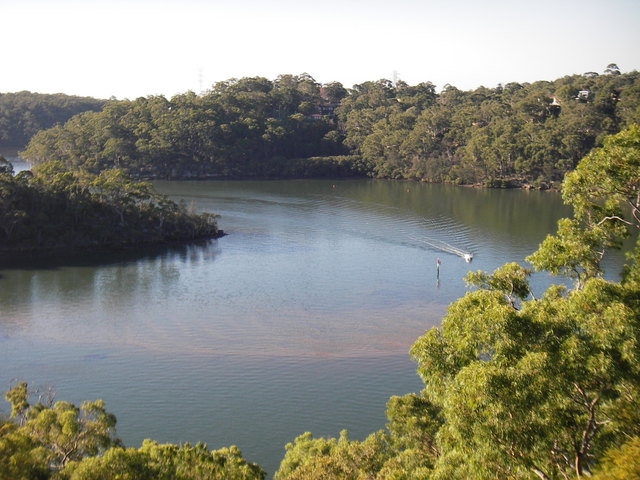
This wonderful view is of Little Moon Bay in the Georges River in the outer suburbs of Sydney. I am lucky enough to see this view everyday. I hope that nature is some part of your everyday life.


and
 then, she {snapped}

Native Flora

I love Australian native flora. This photo is of a native plant most commonly called Burrawang which is an Australian cycad - Macrozamia communis - found in New South Wales. The Aboriginal people of the eastern coast of NSW known as the Cadigal knew of the value of this plant. Their rich diet of fruit and vegetables included the burrawang (Macrozamia), bracken fern, lilly pillies, native passionfruit, native grapes, native mulberry, figs, native yam, kangaroo apples, geebungs, bolwarra and native cherries. Many of these plant foods required extensive pulping, soaking and washing — sometimes for days — to remove toxins. These techniques made it possible to exploit a wide variety of food resources.  
This was true of the burrawang the seeds of which contain toxins which the Cadigal people knew how to render harmless.
RESOURCES: Botanic Gardens Trust

Do you have plants that grow native to your area that you love?


Monday

Growing Organic Food in the City

Food Forest Workshop Sat 24th & Sun 25th Nov (One or two days – your choice)

This is your last chance to attend this sensational workshop with Aaron Sorensen and Dan Deighton. Learn about growing fruits; nuts; berries; herbs; vegetables organically and harmoniously as well as guilds; companion planting; succession; green manures; cover crops; pioneers; support species; creating healthy living soils; integrating poultry and small animals into the system & more.

Learn how to design, develop, maintain and make your food forest the most diverse, productive and sustainable.
At Permaculture Sydney Inst.

Wednesday

Shark nets in Queensland Australia


The Queensland Government says no dolphins have been caught in shark nets during a trial of an acoustic alarm.
The 'pingers', developed by a Sunshine Coast company, are being trialled in shark nets at Rainbow Beach and the Gold Coast.
The manager of the Shark Control Program, Jeff Krause, says the new pingers will soon be installed in shark nets across the state.
"We began a trial in April this year where we put the F-70 pingers on six nets down at the Gold Coast and also two of the three nets at Rainbow Beach," he said.
"So far we haven't caught a dolphin in any of those nets with the F-70 pinger on ... so that's great news."
The State Government says the acoustic alarms, fitted to shark nets in 2010, have also seen a big reduction in the number of whales becoming entangled.

RESOURCE: ABC NEWS 22nd October, 2012

Sunday

Shopping ‘swap-style’ for National Recycling Week


Imagine a time when new shoes and new outfits come for free. Well, the time is now. Easy on the environment and painless on your purse, The Big Aussie Swap is happening as part of National Recycling Week 2012, and it’s a chance to clean out your cupboards and get ‘shwapping’.

 This year, National Recycling Week is running from 12 – 18 November and to celebrate, Australia is hosting its Big Aussie Swap Party.

The Big Aussie Swap is an ideal way for Aussies to trade unwanted items, instead of ruling them out as rubbish. Participants exchange their unwanted goods such as clothes, books, CDs and accessories for tokens that can then be used to ‘purchase’ pre-loved products that have been brought along by others.
Swap parties promote the perks of reuse and recycling and are great for the environment, but they’re also a fun and interactive way to refresh your robes and cleanse your collections for free, making it a budget-friendly alternative to buying new.

“Diverting items from landfill and giving a new life to products you no longer need is one of the easiest ways you can do your bit towards a healthy environment,” says Janet Sparrow, Recycling Programs Manager at Planet Ark. “Swapping just one suitcase (20kg) of clothes saves enough energy to run a TV non-stop for 1.7 years.”

Australians around the country are invited to initiate a Swap Party, and can refer to the Big Aussie Swap Survival Guide produced by Planet Ark. The Guide includes an array of tips and tricks for hosting a successful Swap session.

“There’s something special about pre-loved items, and Swaps are becoming a real trend around the world because they are so easy to arrange,” says Sparrow. “Just decide on the kind of items you’d like participants to exchange, organise a time and place for the party, and invite colleagues or friends to bring along possessions they would like to trade.”

Planet Ark founded National Recycling Week as a community education campaign in 1996, with the aim of bringing a national focus to recycling and minimising waste at home, at work and in the community.

To find your nearest Big Aussie Swap event, to download Planet Ark’s Swap Party Survival Guide or for more information about any of Planet Ark’s National Recycling Week initiatives, visit RecyclingWeek.PlanetArk.org or call the National Recycling Hotline on 1300 733 712.

National Recycling Week 2012 is made possible by major sponsorship from Tetra Pak, with supporting sponsorship from The Aluminium Can Group, the Australian Packaging Covenant, Century Yuasa, and Cartridges 4 Planet Ark.

Saturday

Grants are being given to buy new homes

PROSPECTIVE homeowners are being offered unprecedented cash grants to build new homes in South Australia.
The first home buyer's grant is $15,000 AUD and the Housing Construction Grant is $8500, Also some house construction companies are offering similar cash bonuses. Read full story...


Wednesday

Good News Round Up Australia

Release of the vaccine for the deadly horse virus Hendra. This is a major milestone in the fight against the virus. Read more at ABC News
...............................................................................................
600,000 children will sing the same song simultaneously on Thursday 1st November, 2012 at @ 12.30 Eastern Standard Time (depending on where they live)
‘Music. Count Us In’ is managed by Music. Play for Life, the Music Council
of Australia’s grassroots campaign to get more Australians making music: in schools, communities, everywhere.
It’s Australia’s biggest school initiative. With support from The Australian Government, it has run since 2007 and is all about celebrating the value of music education to students’ development, whoever they are, wherever they are. It involves students and teachers from schools all over Australia who sign up to learn, rehearse, then perform the same song, on the same day, at the same time. Find out more about the program and the song they sang.

...............................................................................................
Astronomer Ken Freeman is awarded the Prime Minister's Prize for Science for his discoveries starting in 1970 on dark matter which changed the way we view galaxies and the universe. Professor Freeman of Australian National University has almost 50 years work in this area - the formation and dynamics of galaxies and globular clusters, and particularly in the problem of dark matter in galaxies.  He was one of the first to point out that spiral galaxies contain a large fraction of dark matter. REFERENCE: ICRAR International Centre for Radio Astronomy Research
interview


Thursday

King of the bush

Blue winged Kookaburra

In Australia we have a children's song that we learn in preschool:

 Kookaburra sits in the old gum tree
Merry, merry king of the bush is he.
Laugh, Kookaburra! Laugh, Kookaburra,
Gay your life must be.

This song instills in us a love of the kookaburra and the bush and all things Australian.
But we love the kookaburra because it is a strong looking, large bird, that is not scared of much, that visits us in our parks and sits on our verandahs and has an amazing laugh: kooo,kooo, kooo, kooo, kaaa, kaaa, kaaa, kaaa, kooo, kaaa, koo, kaaa......

CLICK TO HEAR THE KOOKABURRA LAUGH


A LITTLE HISTORY OF THE SONG:
It was written in 1932 for an Australian Girl Guides competition. Marion Sinclair's entry won the competition and it has been loved ever since. As children of course we also sang many different versions of the Kookaburra Song:
Kookaburra sits on electric wire,
jumping up and down with his pants on fire.
Laugh, Kookaburra, laugh, Kookaburra.
Hot your pants must be!