Showing posts with label good idea. Show all posts

Sunday

Meatless Mondays: One-Pot Lentil Bolognese

 One-Pot Lentil Bolognese is a staple in a busy household, especially if like me you have a can or 2 of already cooked lentils on hand and also a can of crushed or chopped tomatoes. It also satisfies all the Bolognese meat lovers here but is much quicker to make.

Going meatless once a week is also a gentle nudge toward better health. Studies show that plant-based diets can lower the risk of heart disease, type 2 diabetes, and certain cancers. 

Meatless Mondays encourage you to explore nutrient-rich foods like legumes, whole grains, vegetables, and healthy fats—ingredients that nourish your body and support long-term wellness.

One-Pot Lentil Bolognese vegetarian recipe

Serves: 4 | Prep Time: 10 min | Cook Time: 30 min

Ingredients:

  • 1 tbsp olive oil

  • 1 onion, finely chopped

  • 2 carrots, diced

  • 2 celery stalks, diced

  • 3 garlic cloves, minced

  • 1 tsp dried oregano

  • 1 tsp smoked paprika

  • 1 cup dried brown lentils, rinsed

  • 1 can (400g) crushed tomatoes

  • 3 cups vegetable broth

  • Salt and pepper to taste

  • Cooked spaghetti or pasta of choice

  • Fresh parsley and grated parmesan (or vegan alternative)

Instructions:

  1. Heat oil in a large pot. Sauté onion, carrot, and celery until softened.

  2. Add garlic, oregano, and paprika. Cook for 1 minute.

  3. Stir in lentils, tomatoes, and broth. Bring to a boil, then reduce heat and simmer for 25–30 minutes until lentils are tender.

  4. Season to taste. Serve over pasta and top with parsley and cheese.

Substitutions: Make It Work With What You’ve Got

Cooking meatless doesn’t mean you need a specialty grocery run every week. Here are some easy swaps to help you adapt the recipes:

Lentils

  • Dry lentils → Canned lentils: 1 cup of dried lentils = about 2½ cups cooked, or 1½ standard cans (400g each). If using canned, drain and rinse before adding to your dish. You may also want to reduce the liquid in the recipe slightly.

Garlic

  • Fresh garlic → Jarred minced garlic: 1 garlic clove = ½ teaspoon of jarred minced garlic. For recipes calling for 3 cloves, use 1½ teaspoons.

Vegetable Broth

  • No broth? No problem:

    • Use water + seasoning: Add salt, pepper, herbs (like thyme, oregano, bay leaf), and a splash of soy sauce or tamari for depth.

    • Or dissolve 1 bouillon cube in 2 cups of hot water as a quick broth substitute.

Cheese

  • Dairy cheese → Vegan cheese:

    • Swap 1:1 with your favorite plant-based cheese.

    • Or use nutritional yeast for a cheesy flavor boost—about 1 tbsp per serving.

One-Pot Lentil Bolognese vegetarian recipe


Monday

Cultivating optimism - 5 ways to try

Optimism isn’t just a personality trait, it’s a skill you can cultivate. Psychologist Martin Seligman coined the term learned optimism, showing that by challenging negative self-talk and reframing how we interpret setbacks, we can train our minds to expect better outcomes and engage more positively with life.

5 ways of Cultivating optimism
Here are a few gentle, practical ways to begin:

1. Reframe Your Inner Dialogue

Notice when your thoughts spiral into worst-case scenarios. Instead of “I always mess this up,” try “This is hard, but I’ve handled tough things before.” It’s not about ignoring reality—it’s about giving yourself a fairer narrative.

2. Practice Gratitude

Even jotting down three small things you appreciated today—sunlight through the window, a kind comment, a warm cup of tea—can shift your focus toward abundance.

3. Surround Yourself with Hope

Optimism is contagious. Spend time with people who see possibility, not just problems. Their perspective can gently reshape your own.

4. Find Purpose

Stanford researcher Leah Weiss says that optimism grows when we live with purpose—whether that’s advocacy, creativity, caregiving, or simply showing up for what matters.

5. Mindfulness and Acceptance

Being present helps you respond rather than react. Optimism doesn’t mean denying hardship—it means believing that growth is possible through it.

Further information

Optimism is the belief or attitude that things will turn out well, even in the face of challenges or uncertainty. It’s about expecting positive outcomes and focusing on the good, rather than dwelling on the bad.

Here’s how it shows up in everyday life:

  • Seeing a setback as temporary and believing you’ll bounce back.

  • Saying “I’ll figure it out” instead of “I can’t do this.”

  • Trusting that people mean well, even when things go wrong.

  • Looking forward to the future with hope, not fear.

Optimism doesn’t mean ignoring problems—it means facing them with confidence that solutions are possible. It’s a mindset that can boost resilience, improve health, and help people cope better with stress.

Gratitude is the feeling of thankfulness and appreciation for what you have, what others do for you, or even for life itself. It’s about noticing the good—whether it’s a kind gesture, a beautiful moment, or something you often take for granted—and letting yourself feel thankful for it.

Here’s how gratitude shows up:

  • Saying “thank you” and meaning it.

  • Feeling moved by a sunrise or a quiet moment.

  • Remembering someone’s kindness and appreciating it.

  • Shifting focus from what’s missing to what’s already good.

Gratitude isn’t just polite—it’s powerful. Studies show it can improve mood, reduce stress, strengthen relationships, and even support physical health.

Hope is the belief that things can get better—even when life is hard or uncertain. It’s a feeling that gives you strength to keep going, even if you don’t know exactly how things will turn out.

Why Hope Is a Good Thing

  • It fuels resilience: Hope helps you bounce back from setbacks. When you believe there's a chance for improvement, you're more likely to keep trying.

  • It supports mental health: People with hope tend to feel less anxious and depressed. It’s like emotional oxygen—keeping your spirit alive.

  • It motivates action: Hope isn’t just wishful thinking. It encourages you to take steps toward a better future, even small ones.

  • It connects you to others: Sharing hope builds trust and community. It reminds us we’re not alone in our struggles.

Hope doesn’t mean ignoring reality—it means believing that change is possible, and that you have a role in shaping it. Whether you're facing illness, loss, or uncertainty, hope can be the quiet force that helps you move forward.

Mindfulness is the practice of paying full attention to the present moment—without judgment, distraction, or rushing ahead. It means noticing what’s happening right now: your thoughts, feelings, body, and surroundings.

Why Mindfulness Is a Good Thing

  • It calms the mind: Mindfulness helps quiet racing thoughts and reduces stress. It’s like giving your brain a deep breath.

  • It improves focus: By training your attention, mindfulness makes it easier to concentrate and stay present.

  • It supports emotional health: Mindful people tend to feel less overwhelmed and more balanced. It helps you respond, not react.

  • It enhances physical well-being: Studies show mindfulness can lower blood pressure, improve sleep, and even reduce pain.

  • It deepens connection: Being fully present helps you listen better, communicate more clearly, and enjoy relationships more deeply.

Mindfulness isn’t about clearing your mind—it’s about noticing what’s in it, gently and with curiosity. Even a few minutes a day can make a difference.

Acceptance means recognizing and allowing things to be as they are—without trying to fight, fix, or deny them. It’s not about giving up or agreeing with everything; it’s about making peace with reality, especially when it’s painful or out of your control.

Why Acceptance Is a Good Thing

  • It reduces emotional suffering: Struggling against what you can’t change often adds more pain. Acceptance helps ease that burden.

  • It builds resilience: When you accept a challenge, you’re better able to respond calmly and wisely, rather than react with frustration or fear.

  • It supports healing: Acceptance creates space for growth, self-compassion, and moving forward—especially in chronic illness, grief, or life transitions.

  • It improves relationships: Accepting others as they are (even when they’re imperfect) leads to deeper understanding and less conflict.

  • It brings clarity: When you stop resisting reality, you can see it more clearly—and make better choices from a grounded place.

Acceptance doesn’t mean you stop caring or trying. It means you stop wasting energy on what can’t be changed, and start focusing on what you can do.

how to be optimistic - 5 ways to try


Wednesday

How to Stay Positive in a World Full of Negative News

 It’s no secret that the news these days can feel overwhelming. Every time you scroll through social media, turn on the TV, or check your favourite news app, it seems like there’s another crisis, another conflict, another reason to feel anxious. And while staying informed is important, constantly absorbing negative news can take a real toll on your mental health. 

Staying Positive in a World Full of Negative News

So how do you stay positive when the headlines are full of doom and gloom? The good news (yes, there is good news!) is that you have more control than you might think. Here are some simple, effective ways to stay informed without letting negativity take over. 

1. Be Intentional About Your News Consumption 

Not all news is created equal. Some sources focus on fear and outrage because it gets more clicks and views. Instead of mindlessly scrolling, be intentional about where and how you get your news. Choose reputable sources that focus on facts rather than sensationalism. Further, set specific times during the day to check the news instead of consuming it constantly. This helps prevent the overwhelming feeling that negativity is everywhere, all the time. 

2. Balance the Bad with the Good 

Yes, bad things happen in the world, but good things happen too! The problem is positive stories don’t always get as much attention. Seek out news that highlights human kindness, innovation, and progress. Websites like The Good News Network, Upworthy, and Fix the News share uplifting stories that remind us that the world isn’t all bad. In the same vein, follow social media pages that celebrate acts of kindness, scientific breakthroughs, or inspiring individuals. 

3. Focus on What You Can Control 

A lot of news, especially the big, global issues, can make us feel powerless. But instead of dwelling on things beyond your control, focus on what you can do. That might mean focusing more locally, donating to a cause you care about, or volunteering in your community. Taking action, no matter how small, can help you feel empowered rather than hopeless. 

4. Take Digital Detox Breaks 

It’s okay to unplug! Taking a break from the constant stream of information can do wonders for your mental health. Try a “no news day” once a week or set limits on how much time you spend on news apps and social media. 

5. Practice Gratitude 

Gratitude is one of the best antidotes to negativity. When you focus on what’s going right in your life, it shifts your perspective. Try keeping a gratitude journal or simply taking a moment each day to appreciate the little things, like a good cup of coffee, a sunny day, a kind gesture from a stranger. The more you look for the good, the more you’ll find it.

6. Keep Things in Perspective 

It’s important to remember that the news is just a snapshot of what’s happening, not the full picture. The world has always had challenges, but it has also made incredible progress. Crime rates have dropped in many parts of the world, medical advancements are saving lives, and people continue to show resilience and kindness in the face of hardship. 

🌞Final Thoughts 

You can’t control the news, but you can control how you engage with it. By being mindful of your media consumption, seeking out positive stories, taking breaks, and focusing on gratitude, you can maintain a sense of hope and optimism, even in a world that often feels overwhelming. 

So, take a deep breath, turn off the news for a little while, and remember … there’s still so much good in the world.

Authored by Dr Tim Sharp 

Contact: tim@thehappinessinstitute.com 

www.drhappy.com.au 

Linkedin

Instagram

Stay Positive in a World Full of Negative News


Sunday

Solar Panels Shine Bright with Recycled Glass

Solar Panels from Recycled Glass

In a breakthrough for sustainable energy, researchers have confirmed that solar panels made with recycled glass perform just as well as those made with brand-new materials. That’s right—no drop in power, no compromise in quality. Just clean energy, made cleaner.

The study, led by Arizona State University and solar recycling firm SOLARCYCLE, tested prototype panels built from a 50/50 mix of recycled and virgin glass. The results? Identical performance across all key metrics. It’s a quiet revolution in how we think about renewable infrastructure—not just what it does, but how it’s made.

Dr. Zachary Holman, vice dean for research and innovation at ASU, put it simply: “You don’t have to sacrifice performance to build solar panels more sustainably.” That’s a powerful message for an industry often caught between ecological ideals and practical demands.

The glass was taken from old solar panels that were no longer working. The company used its special technology to clean and reuse the glass. By showing that this recycled glass can be used to make new, high-quality solar panels, the team proved that solar panels can be made in a way that creates less waste, makes it easier to get materials, and keeps useful stuff from being thrown away.

SOLARCYCLE isn’t just experimenting in the lab—they’re taking action. They’re building a new factory in Cedartown, Georgia, that will make solar panel glass using mostly recycled materials. It’s the first factory like this, and it’s part of a bigger push to make solar energy even more eco-friendly—not just renewable, but able to renew itself.

Other companies are jumping in too. In California, PV Circonomy has created machines that can recover 99.3% of the parts from old solar panels. And in Sweden, scientists have figured out how to recycle solar cells over and over again without losing their power.

At All Things Good, we believe sustainability isn’t just about what we save—it’s about what we reimagine. This isn’t just a win for solar. It’s a win for circular design, climate resilience, and the kind of future we want to build.

SOURCE 

Solar Panels from Recycled Glass

Monday

The Benefits of humming for a healthy life

The Benefits of Humming

Humming might seem like a simple, even absent-minded habit—but it turns out this gentle, soothing sound can offer a surprising range of health benefits for both body and mind. Whether you're humming your favorite tune or just a single tone, here's how this small act can make a big difference:

1. Activates the Vagus Nerve

Humming stimulates the vagus nerve, which is responsible for calming the nervous system. This can help reduce stress, lower heart rate, and promote a sense of well-being.

2. Improves Sinus Health

Humming increases airflow in the sinuses and helps open blocked nasal passages. This can support sinus drainage and may reduce the risk of infections or chronic sinusitis.

3. Promotes Deep Breathing

The act of humming naturally encourages slower, more conscious breathing. This supports better oxygenation, reduces anxiety, and can even help with conditions like high blood pressure.

4. Supports Vocal Cord and Throat Health

Humming gently exercises the vocal cords and can be a helpful warm-up for the voice. It's also soothing for the throat and may ease discomfort in people who talk a lot during the day.

5. Increases Nitric Oxide Production

Research shows that humming significantly increases the production of nitric oxide in the nasal passages—by up to 15 times. Nitric oxide has antiviral and antibacterial properties, supports immune function, and helps regulate blood flow.

6. Boosts Mood and Mental Clarity

Humming can release endorphins and create a meditative, mindful state. This helps lift mood, reduce symptoms of depression and anxiety, and improve focus.

7. Enhances Meditation and Relaxation

When used in practices like yoga or mindfulness meditation, humming (such as chanting “Om”) can deepen the relaxation response and bring greater mental clarity and spiritual connection.


In Summary:
Humming is a simple, accessible, and free tool to improve your health—physically, emotionally, and even spiritually. Next time you’re feeling tense, congested, or just need a mood boost, try humming for a few minutes. It’s a small act that hums with healing power.

Pin it

Benefits of humming

 
Here are reputable sources supporting the benefits of humming:


1. Activates the Vagus Nerve & Reduces Stress

  • Source: Porges, S. W. (2011). The Polyvagal Theory: Neurophysiological Foundations of Emotions, Attachment, Communication, and Self-regulation.

    • This foundational work explains how vocalizations like humming stimulate the vagus nerve, enhancing relaxation and parasympathetic nervous system activity.


2. Improves Sinus Health & Nitric Oxide Production

  • Source: Lundberg, J. O., & Weitzberg, E. (1999). “Humming greatly increases nasal nitric oxide.” American Journal of Respiratory and Critical Care Medicine, 160(2), 911–914.

    • DOI: 10.1164/ajrccm.160.3.9811072

    • Found nitric oxide levels in the nasal passages increase 15-20x during humming, supporting sinus health and antimicrobial defense.


3. Promotes Deep Breathing & Calms the Mind

  • Source: Lehrer, P. M., & Gevirtz, R. (2014). “Heart rate variability biofeedback: how and why does it work?” Frontiers in Psychology, 5, 756.

    • Explains how slow, regular breathing (as with humming) calms the autonomic nervous system and enhances mood.


4. Enhances Mood & Emotional Wellbeing

  • Source: Kraus, T. et al. (2007). “Music in the treatment of depression.” Neuropsychobiology, 55(4), 193–200.

    • While this study focuses on music, it highlights how vocal sounds (including humming) stimulate endorphin release and improve emotional regulation.


5. Vocal and Respiratory Benefits

  • Source: Titze, I. R. (2000). Principles of Voice Production.

    • Discusses how vocalizations like humming warm up the voice and maintain vocal fold health.


6. Meditation & Humming (e.g., “Om”)

  • Source: Kumar, V., Nagendra, H., & Naveen, K. V. (2010). “Immediate effect of ‘OM’ chanting on cardiovascular parameters and heart rate variability.” Indian Journal of Physiology and Pharmacology, 54(2), 132–136.

    • Shows that chanting “Om” reduces heart rate and increases mental calmness, similar to effects from humming.

World Laughter Day: The Healing Sound Within


World Laughter Day logo

On the first Sunday each May the world pauses—in laughter.

World Laughter Day, founded in 1998 by Dr. Madan Kataria, is more than a celebration. It’s a movement. A global invitation to rediscover the joy that lives within us, waiting to be released. With over 6,000 Laughter Clubs worldwide, this day reminds us that laughter is not just a reaction—it’s a practice, a medicine, and a bridge between hearts.

“It has been scientifically proven that laughter is both preventive and therapeutic.” — Dr. Madan Kataria

Laughter as Connection

Laughter is a universal language. It doesn’t require translation, credentials, or permission. It rises from the body like breath, and in that moment—whether shared with a friend, a stranger, we are connected.

World Laughter Day aims to foster global friendship through laughter, reminding us that joy is a common thread in the human experience. It’s a gentle rebellion against isolation, fear, and division. When we laugh together, we dissolve the barriers that separate us.

The Science of Joy

Laughter isn’t just emotional—it’s physiological. Studies show that laughter:

  • Boosts immunity and lowers stress hormones

  • Improves cardiovascular health and blood circulation

  • Releases endorphins, the body’s natural feel-good chemicals

  • Enhances mood, energy, and resilience

  • Strengthens social bonds and empathy

Laughter Yoga, the practice pioneered by Dr. Kataria, combines intentional laughter with deep breathing. Even simulated laughter—when practiced regularly—can lead to genuine joy and improved well-being. It’s proof that the body doesn’t wait for a reason to heal. It just needs permission.

Within Yourself: The Laughing Heart

At All Things Good  we believe that healing begins inside. Laughter is one of the most accessible tools we have. It doesn’t erase pain, but it softens it. It doesn’t deny struggle, but it reminds us that joy can coexist with grief.

So this World Laughter Day, consider:

  • Joining a local or online Laughter Yoga session

  • Watching something that makes you laugh without guilt or restraint

  • Creating a laughter ritual—morning giggles, silly dances, playful affirmations

  • Sharing a moment of joy with someone who needs it

Let your laughter be a balm. Let it be a bridge. Let it be a reminder that all things good—especially joy—begin within yourself.

More info about World Laughter Day

More information on laughing and smiling:
and more at GNN SMILE

World Laughter Day


Wednesday

Winning is important to me, but...


Phil Jackson has won 13 NBA championships: 2 as a player and 11 as a coach.

So he sure knows how to win, but more important than that is his approach and what he has to say about winning which is important to living a good life...

Quote about winning


Phil Jackson is known for his "zen" approach to the game of basketball. He coaches about focusing on the We rather than the me. A lesson for a team sport as well as for life in general. 

He has written a thought-provoking memoir in which he shows how he encourages his players to work with a clear mind - not thinking, just doing. 

Sacred Hoops: SPIRITUAL LESSONS OF A HARDWOOD WARRIOR by Phil Jackson.


"An earnest and refreshing answer to the dollar driven soullessness of modern professional sports." -- People
Phil Jackson is an American original. A two-time All-American at the University of North Dakota, in 1967 he was drafted by the New York Knicks, where he played for 11 years and was a member of the 1970 and 1973 championship teams. 
Jackson guided the Chicago Bulls to six NBA championships in his nine years as head coach from 1989-1998, and guided the LA Lakers to three titles as their head coach from 1999-2004.
You can find out more about the book here. It can be purchased on kindle for only 2.99 or also as a paperback. 
Kobe Bryant and Phil Jackson
Kobe Bryant and Phil Jackson aka the Zen Master.

Philip Douglas "Phil" Jackson (born September 17, 1945) is an American professional basketball executive, former coach and former player, currently serving as president of the New York Knicks in the National Basketball Association (NBA). 

Jackson was the head coach of the Chicago Bulls from 1989 until 1998, during which Chicago won six NBA championships. His next team, the Los Angeles Lakers, won five championships from 2000 until 2010. 

Phil Jackson NBA coach in 2009
Jackson in 2009

In total, Jackson has won 11 NBA titles as a coach, surpassing the previous record of nine set by Red Auerbach. 

Jackson is known for his use of Tex Winter's triangle offense as well as a holistic approach to coaching that is influenced by Eastern philosophy, earning him the nickname "Zen Master".

Jackson cites Robert Pirsig's book Zen and the Art of Motorcycle Maintenance as one of the major guiding forces in his life. He also applies Native American spiritual practices as documented in his book Sacred Hoops. He is the author of several candid books about his teams and his basketball strategies. 

In 2007, Jackson was inducted into the Basketball Hall of Fame. In 1996, as part of celebrations for the National Basketball Association's 50th anniversary, Jackson was named one of the 10 greatest coaches in league history. He retired from coaching in 2011 before joining the Knicks as an executive in March 2014.

Bio from Wikipedia, the free encyclopedia. 

Photo by Keith Allison from Baltimore, USA (RO9A3387) [CC BY-SA 2.0 (http://creativecommons.org/licenses/by-sa/2.0)], via Wikimedia Commons.


“There’s a Zen saying I often cite that goes, “Before enlightenment, chop wood, carry water. After enlightenment, chop wood, carry water.” The point: Stay focused on the task at hand rather than dwelling on the past or worrying about the future.”
― Phil Jackson, Eleven Rings: The Soul of Success.


Phil Jackson quote


Phil Jackson quote

Thursday

12 creative little libraries from around the world.

little libraries from around the world.

Our cities are full of large libraries that are amazing and free, but here we have chosen to share the little tiny libraries that are springing up everywhere. These libraries can be created by anyone, anywhere and each one has a story to tell about the love of books, the love of sharing, and a sense of community.

Hundreds of little libraries have been created but not all of them have been photographed and shared. That’s why we set out to find as many little libraries as we could. We love how they add uniqueness to the areas of the cities and suburbs where they are found. We really enjoy the creativity that has gone into making these libraries and have included what we feel are the most creative from around the world.

We hope you enjoy this list of the most creative little libraries from around the world.

We would love to add more. Did we miss any from your neighborhood? Feel free to submit pictures at our Facebook or Twitter feeds to be added here or let us know in the comments below.


Tree stump library


Robot library Monica Thompson

Tardis in Kenmore Washington, USA. Jennifer Brozek

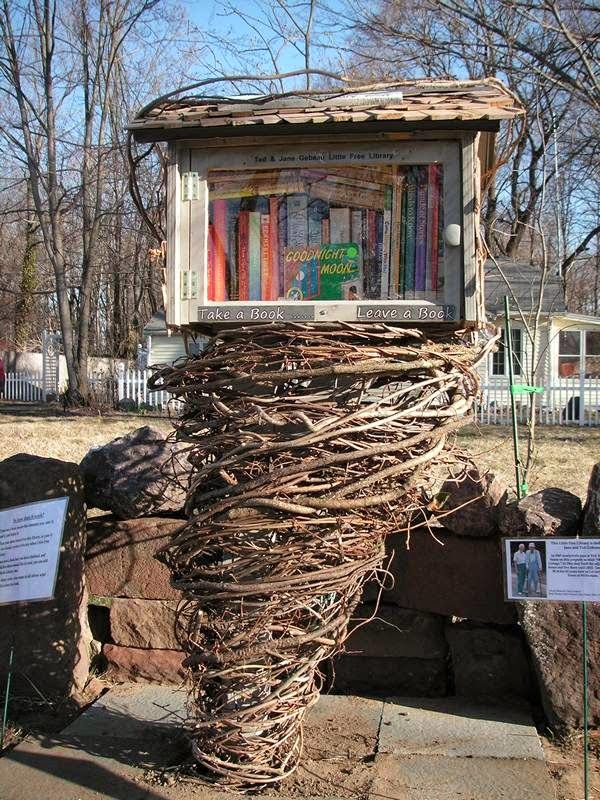
Wizard of Oz Tornado library Pomeroy Street MASSACHUSETTS, USA

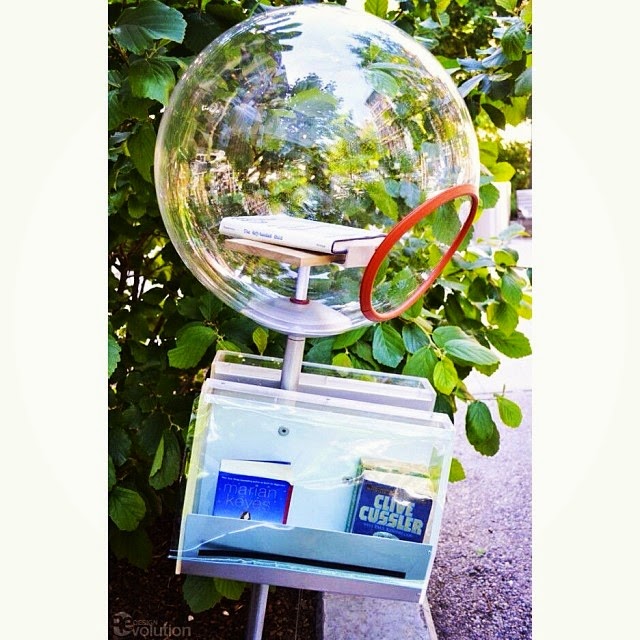
Space age library
 
Winchester, Texas USA. 'We decided to build a library that reflected our small community.
A chicken coop theme fit us perfectly!' - Margaret Atkins.

Created by Stereotank, a public installation project providing New Yorkers
with a spontaneous opportunity to read a book.

Tree trunk library in Jackson Street Seattle, USA

Library in a phone booth

Public Bookshelf created in a bus stop in the city of Porto Alegre, Brazil


Book house in Maleny, Queensland, Australia.
 
Houston, Texas USA. A boat-shaped Library at the church for Clear Lake Community.
Diane Jones.

 
If after seeing these cute and worthwhile structures you may feel inspired to build your own out of an old cupboard or some other creative design in your head. There are people who can help you with the considerations that you may yet have not thought apart like "how do I keep my little library protected from the rain? " or "how wide should the shelves be to house most books?"

Little Free Libraries & Tiny Sheds: 12 Miniature Structures You Can Build is highly recommended, as the book you need, by The Little Free Library organization. Yes, there is an organization! They are a nonprofit organization based in Hudson, Wisconsin, USA. Little Free Library (LFL) is an award-winning nonprofit organization at the center of a global literacy movement. Find out more about it here.

This book is produced in cooperation with Little Free Library, and is a builder's complete source of inspiration and how-to knowledge. Illustrated throughout with colorful step-by-step photography and a gallery of tiny structures for further inspiration, Little Free Libraries and Tiny Sheds covers every step: planning and designtools and building techniquesbest materials, and 12 complete plans for structures of varying size and aesthetics. In addition, author and professional carpenter Phil Schmidt includes information on proper installation of small structures and common repairs and maintenance for down the road. You can check it out or purchase it here


Little Free Libraries and Tiny Sheds book cover

If you liked this article you may also like History of the Little Free Library which includes the benefits of running a little library.

Monday

History of the Little Free Library

 
In its most basic form, a Little Free Library is a box full of books where anyone may stop by and pick up a book and bring back another book to share. It's a  neighbourhood book exchange. It’s a place where neighbours share their favourite books.

In 2009, Tod Bol decided to build a model schoolhouse as a tribute to his mother, a former school teacher who loved to read. He built it from recycled materials, filled it with books and placed it in his front garden in Wisconsin, USA with a sign that read ‘Little Free Library.’

Tod Bol's 1st little library
He made more little houses and gave them to family and friends and the idea for a global network of Little Free Libraries was born.

The most often quoted benefits of Little Free Libraries
  • People meet more neighbours and passers-by than they have in years.
  • They often spend time getting to know people as well as books.
  • They value the free-wheeling exchange of books, especially because they are often surprised by the variety and quality of the collections.
  • They like giving as much as –or perhaps even more than—taking books.
  •  Little Free Libraries are likely to have a positive influence on community quality of life and social capital.
  • Small, local business owners report that Little Free Libraries help them attract and keep customers.
  • Children, youth and adults of all ages and backgrounds can share in the give and take. People of widely diverse socioeconomic and cultural backgrounds participate in this grassroots effort.
You can find out more about the Little Free Library here .

This is linked up at Read With Me

Wednesday

Awarded for services to the environment

good news article for Australian environment
Alison Teese was awarded a Medal of the Order of Australia (OAM) for services to conservation and the environment at the 2015 Australia Day Awards. The OAM list provides national and formal recognition for Australians who have made a significant difference to their communities.

Alison Teese is a farmer who has been recognised for setting up a philanthropic trust to preserve the nation’s native eucalypt trees. She was raised on a dairy farm in Gippsland, Victoria, in Australia, and her early life shaped her passion for the land and natural science. Her work involves a range of projects that extends from creating bird habitats to conserving native trees.

In 1989, Alison became one of the founding members of the Moolort Landcare Group and still remains an active member today, as she continues to raise awareness of the environment including climate change and land management.

 
Landcare Australia Limited is the leading not-for-profit organisation responsible for raising awareness and funding for the Landcare movement.


Living plants generate electricity

A new type of sustainable energy is now available. Living plants are creating clean, renewable, sustainable, efficient, bioenergy.

Bioenergy is renewable energy made available from materials derived from biological sources.

Plant-e is a company that develops and produces products in which living plants generate electricity. To find out more please watch this video.

Reviving vital traditional knowledge

Slava Cheltuev’s is reviving traditional knowledge
Slava Cheltuev

Slava Cheltuev, is a Telengit community leader and shaman from the Russian Altai Mountain's high altitude Kosh Agach district. 

Whilst traversing Altai's sacred lands, he reflects on our 21st century world and stresses the importance of reviving vital traditional knowledge - age-old wisdom that instruct the respectful and harmonious relationship between local environment and human behaviour.

Cheltuev emphasizes that nature is not a resource—it’s a relative. In Altai cosmology, every mountain, spring, and animal has a spirit, or eezi, deserving of reverence. His call to revive traditional practices isn’t nostalgic—it’s urgent. 

Find out more from the man himself in the video below.


Kosh-Agachsky District is one of the most fascinating and remote regions in Russia’s Altai Republic. Here’s a closer look at what makes it so unique:

Geographic & Cultural Overview

  • Location: Southeastern Altai Republic, bordering Mongolia, China, and Kazakhstan.

  • Elevation: Around 1,750 meters (5,741 feet) above sea level—making it one of the highest inhabited areas in Siberia.

  • Landscape: A dramatic mix of alpine meadows, glacial valleys, and vast steppe. It’s part of the Chuya Steppe, a cold desert-like plateau surrounded by snow-capped peaks.

  • Climate: Harsh and dry, with extreme temperature swings. Summers are short and cool; winters are long and bitterly cold.

Nature & Wilderness

  • Biodiversity: Home to rare species like snow leopards, argali sheep, and golden eagles.

  • Sacred Sites: The Altai Mountains are considered sacred by indigenous Telengit people. Many peaks, rivers, and valleys are believed to have spirits (eezi).

  • Tavan Bogd Range: Near the district, this range includes Belukha Mountain—the highest peak in Siberia—and stunning glaciers like Potanin.

People & Traditions

  • Population: Roughly 18,000 people, mostly rural. Ethnic composition includes:

    • Kazakhs – 53%

    • Altaians (including Telengits) – 40%

    • Russians – 3%

  • Telengit Culture: Deeply spiritual, with shamanic traditions and a worldview rooted in harmony with nature. Slava Cheltuev is one of the most prominent voices from this community.

  • Nomadic Heritage: Many families still practice seasonal herding of yaks, sheep, and horses.

Challenges

  • Environmental Threats: Climate change is altering traditional grazing patterns and water availability.

  • Development Pressure: Mining and tourism pose risks to sacred lands and fragile ecosystems.

  • Cultural Preservation: Younger generations are increasingly disconnected from traditional knowledge, prompting leaders like Cheltuev to advocate for revival.

Read about more good people:

Tuesday

Pay it forward


  • International Pay it Forward Day is 

    Thursday, April 28, 2016

  • Pay it Forward Day UK
  • Pay It Forward Foundation

  • International Pay It Forward Day

    Pay it forward is an expression used when someone who is done a good deed repays it to others not the original benefactor. The concept is old, but the term is quite recent:

    • First use of the term may have been by Lily Hardy Hammond in her 1916 book In the Garden of Delight: "You don't pay love back; you pay it forward."
    • The Pay it forward concept was the key plot element in an ancient Greek play from 317 BC called Dyskolos by Menander.
    • The concept was described by Benjamin Franklin, in a letter to Benjamin Webb dated April 25, 1784:
    I do not pretend to give such a deed; I only lend it to you. When you [...] meet with another honest Man in similar Distress, you must pay me by lending this Sum to him; enjoining him to discharge the Debt by a like operation, when he shall be able, and shall meet with another opportunity. I hope it may thus go thro' many hands, before it meets with a Knave that will stop its Progress. This is a trick of mine for doing a deal of good with a little money.
    • The term "pay it forward" was used by Robert A. Heinlein in his book Between Planets, published in 1951
    • In 2000, Catherine Ryan Hyde's novel Pay It Forward was adapted into a film of the same name, starring Kevin Spacey, Helen Hunt and Haley Joel Osment. It describes creating a social movement of doing good deeds to make the world a better place.

    Friday

    Beautiful bicarb

    bicarb soda uses
    Beautiful bicarb - Otherwise known as Bi-carb Soda or Baking Soda is cheap, easy to use and enviro friendly.  It has a myriad of uses.

    Bicarb can:
    • Deodorise your carpet - sprinkle on and leave 10 minutes, then vacuum .
    • Absorb food odours - put a small container full in the fridge.
    • Remove insecticides and pesticides from fruit and veg - wash produce in warm water which has bicarb in it.
    • Restore stained tea cups - apply with a damp cloth and rub and rinse
    • Clean juice, wine, and coffee stains from material - rub the spot with bicarb made to a paste with water before washing.
    • Kills fleas - apply to pet's fur, wash off to prevent skin irritation.
    • Clean iron plate - Mix to paste, rub on surface of iron, wipe off.
    • Unclog and freshen drain - 1 cup baking soda and boiling water. 
    • Mildly exfoliate your face - add  a few drops of water to bicarb to make a paste - rub on and rinse off.
    • Prolong the life of cut flowers - Add a teaspoon of baking soda to a vase of freshly cut flowers.
    • Whiten teeth - put bicarb and a drop of water on your toothbrush and scrub teeth about once a week.
    • Clean kitchen benchtops - sprinkle with bicarb and add white vinegar - scrub and wipe off.
    • Clean and shine Chrome - with Bicarb applied on a damp cloth.
    • Remove sweat odours from fabrics - add bicarb to your laundry dispenser.
    Do you have a use of beautiful bicarb that you can add?